
Contra grinding
You can just do things at a sustainable pace
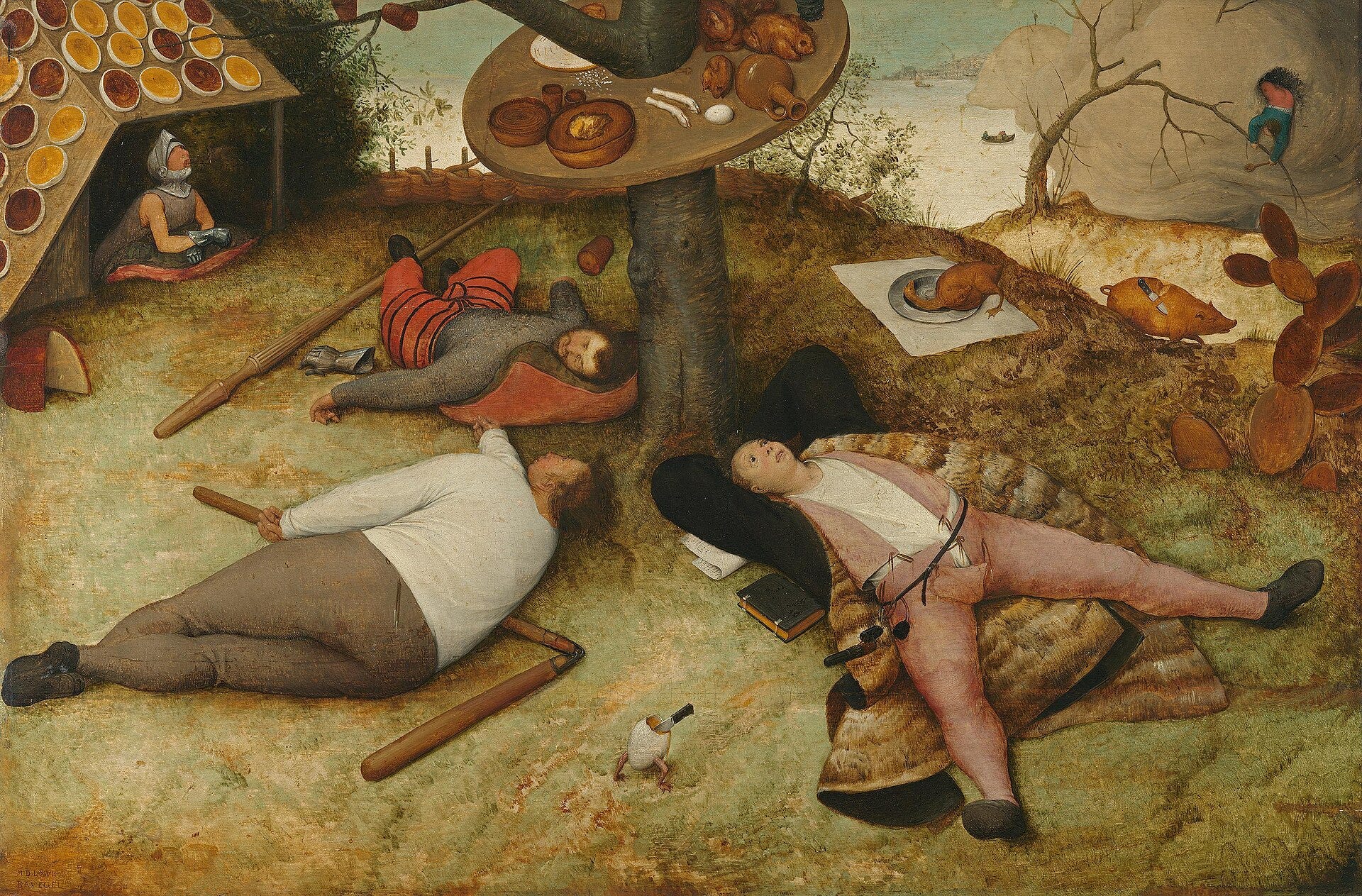
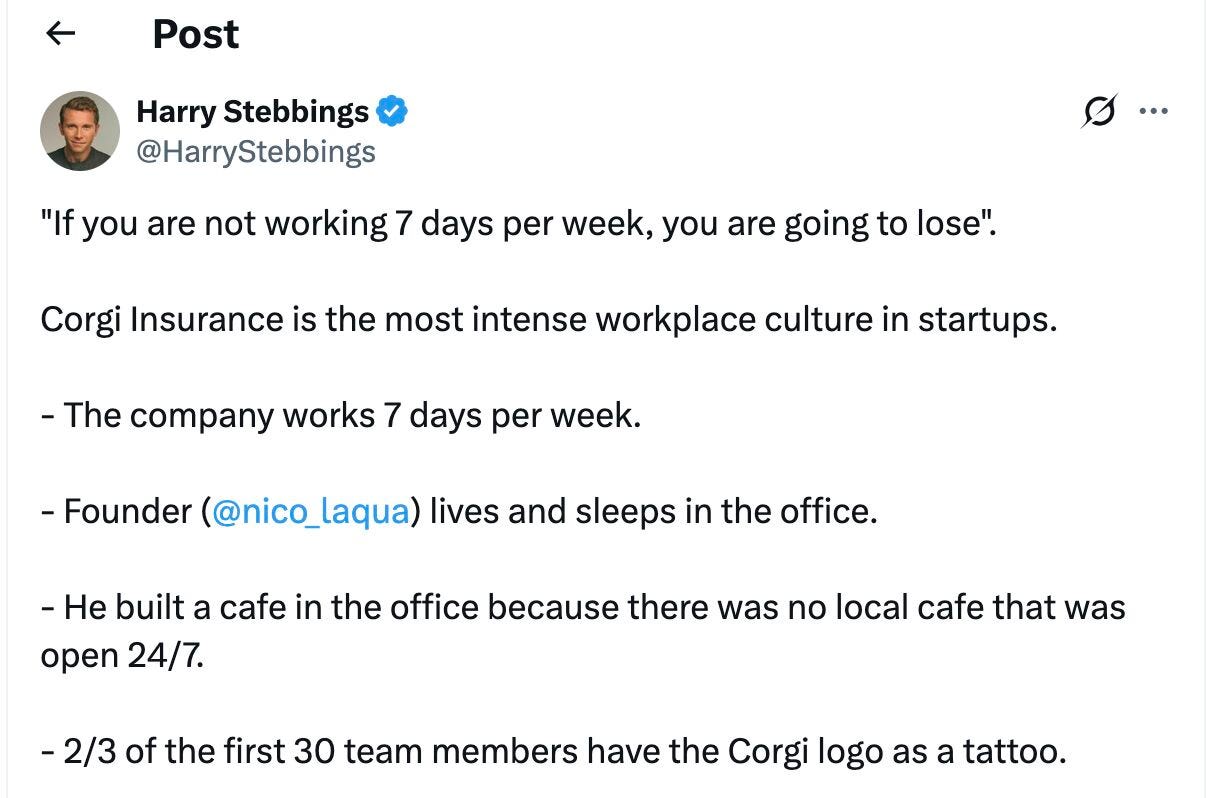
I suspect “grindset” is a bit out of fashion these days, but the startup world doesn’t seem to know that. For as long as I’ve been in that milieu, grinding – pushing yourself to impossible limits of effort, spending all day and night working on or thinking about your startup – has been not only valorised but presented as an essential part of running your own business.
Partly this is because startups are very unintuitive. If you’re a tiny company with a tiny team and you’re hoping to take on IBM, it seems impossible to succeed – except by applying superhuman amounts of effort.
This of course is the wrong theory of change: startups can beat large companies because those companies become sclerotic, both in the sense of their technology and of the organisations themselves.
At my last startup, we built fintech software that was miles ahead of everyone else without working ourselves to death. How could a tiny team make something better than multinational financial services companies? Because we were building something from the ground up using modern web development practices. We could do it with a tiny team because we insisted on using Boring Technology and making smart decisions that made the product easier to maintain. We also didn’t have the dead weight of a legacy platform to support.
It wasn’t because we just typed faster than the competition. If anything, programming doctrines like Extreme Programming emphasise working at a sustainable pace. Short crunches are probably an inevitable part of running a small company: planning is more art than science, you have deadlines to hit and clients to impress, so you need to pull out all the stops for a while to get things out.
Marc Andreessen talks about Mozilla needing server software that was at parity with what Microsoft was producing; while his developers were looking for a magic shortcut, he just said simply: “we don’t need a silver bullet. We need lots of lead bullets.”
But ultimately grinding catches up to you: you write unmaintainable code, make poor decisions, and your team starts to resent you. It’s a tool to be applied selectively rather than a company culture. If anything, constantly grinding and employees burning out is a sign that you’re really not getting it right as an organisation.
This is the second way startups can compete with the big guys, even though that seems impossible on its face. If you have a company ‘operating system’ that cuts organisational cruft, you can simply get more done per unit of work. Outcompete through sheer efficiency – instead of endless planning meetings, layers of approval, design focus groups, interminable email threads and all the other nonsense that large bureaucracies attract, focus on building and moving faster. Even when we started out, my cofounder could throw me a feature spec in the morning and have a working version to test by lunchtime.
I always hated the fact that SBF was lionised for sleeping on a beanbag under his desk (to say nothing of the other obviously stupid and performative stuff he did, like playing League of Legends while on investor calls). But people loved it. Surely FTX couldn’t just succeed on its merits, being one of the most popular and innovative crypto trading platforms – it could only be successful because of its wunderkind CEO who worked infinity hours.1
But “we chose boring tech and kept the org flat” doesn’t photograph well, so companies present themselves as hustle machines to signal to investors and to themselves that they are Very Committed. VCs lap it up (or worse, demand it), continuing the cycle. But it’s mostly theatre, and founders would be better served spending that energy on running their companies in a productive and sustainable way instead of doing grindset kayfabe.
To be clear: I don’t claim to have had any insight on SBF as a person or to have foreseen the FTX fraud, just that this particular aspect of the image he curated seemed like obvious nonsense. Likewise, my understanding is that FTX actually was genuinely successful in its own right – the fraud concerned keeping Alameda afloat (the failing hedge fund which was propped up by an unlimited line of credit funded by FTX customer funds).