
The connection gap
Proposing a study on conversation and connection
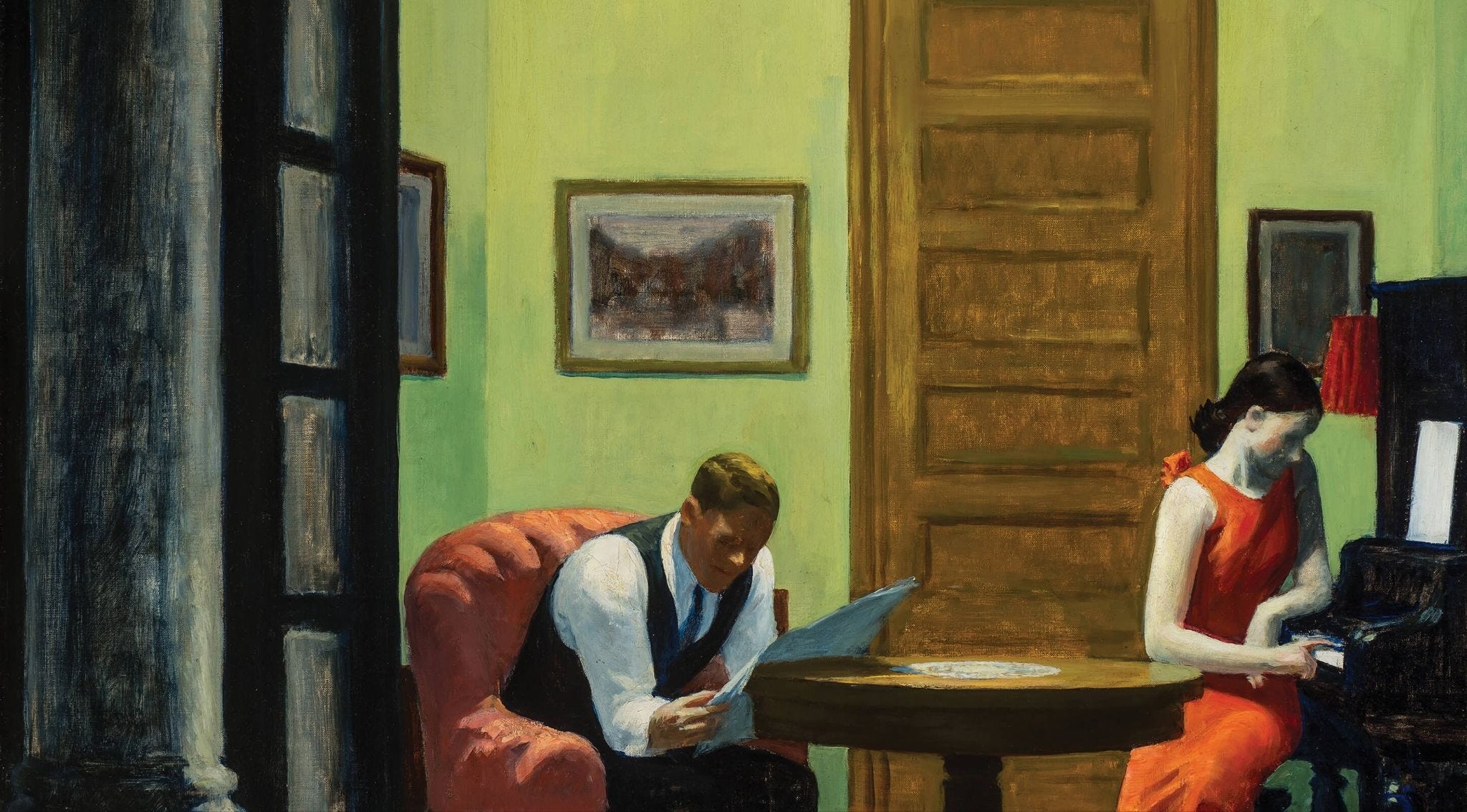
Extroverts are the best connectors in the room – as long as the room is filled with other extroverts.
For an extrovert, conversation is the path to connection. Conversation allows two people who feel comfortable externalizing their internal world to create a shared world extremely quickly.
Extroverts are more likely to initiate conversations and talk more and faster than introverts. They also enjoy conversation more. There are a number of ways this has been tested asking people directly, asking their peers, and by observing their behaviour, for example by recording snippets of their conversations (which is neat because we don’t even need to ask). These recordings show that extroverts say more words in daily life. Their mood is also lifted during social interactions beyond their tendency to just be happier in general (which they are as well).
EVELYN: Conversation, my partner once observed to me, is my special interest. From a very young age it was clear that I really, really want to talk. My mom has many stories about what this was like when I was growing up. Sometimes my desire to talk extended beyond her capacity to listen, and she would tell me that I could keep talking but she wasn’t going to listen anymore, and I would just keep talking. Every elementary school report card had the same notes: “She’s very smart, but she can’t stop talking during class.”
HENRY: I went from an introverted teen to a very extroverted adult. Conversation, social groups, making new connections – I wanted it all and it never seemed to be enough. English social circles are often hard to break into and connections ending up being dyadic, atomised; this led to a lot of loneliness. I can demand a lot from people in terms of their attention and connection, often more than they want!
As 90th percentile extroverts, the authors both seek out and enjoy conversation, sometimes without awareness of others’ need for quieter forms of communication. Sitting quietly with others tends not to be as satisfying of our need to connect with others; conversation tends to be the desired mode. Sometimes this comes at the expense of introverts’ desire to be left alone – whether that’s wanting to have dinner when they want some time to themselves, or feeling disconnected from communities that aren’t focused on regularly scheduled, energetic social interactions.
This is perhaps one of the biggest differences between introverts and extroverts. Not only do introverts not enjoy conversation nearly as much, they also find it difficult to express themselves through conversation. Their inner experience is simply more complex or ambiguous to “find the right words”. You’ve probably come across introverted people who tend to process more before they speak – they’re less able to articulate their inner world in real time.
Introverts also feel prone to feeling misunderstood more generally, that their social interactions don’t reflect who they really are. This might in part be because they’re basically acting to be more extroverted, which can feel inauthentic.
So extroverts, who want to connect with others, have a tool that works beautifully for doing so – as long as the person you’re talking to also feels capable of expressing themselves in conversation. You can think of this strategy for connection as high-bandwidth but only with other extroverts. When two people like talking: boom, instant connection. But when this strategy throttles a sense of connection for one party – or even makes them feel alienated – the favored tool of the extrovert becomes an obstacle to connection.
So then what? There are lots of strategies besides conversation that help people feel connected. Working on something in parallel or together, watching something, shared physical activities, even sitting together in silence can produce this effect. But, like love languages, bridging the gap between connection languages can be troublesome.
This leads to an asymmetry for extroverts: to the extent they are overly reliant on conversation to connect with others, they’re limited in their ability to connect with others who don’t get the same level of connection through conversation. Despite being empathetic and attuned to others they may be defaulting to a mode of interaction that promises connection but actually pushes people away. Their over-reliance on conversation to connect with others might mean they never fully develop the ability to connect in ways in which introverts prefer, accentuating the connection gap.
If your only tool for connection is conversation, you’re going to feel disconnected from about half the population – and you won’t know why, because you’ll be too busy talking to notice.
We want to test the hypothesis that extroverts connect through conversation more than other, non-verbal modes of being together.
We also want to test what happens to extroverts’ felt sense of connection when they are connecting with people for whom conversation is not the preferred mode of connection. How flexible are they in this regard? When interacting with someone for whom silent physical presence is the optimal tool, can they find a way to feel connected as well – or do they mirror and empathize with the other person but privately feel disconnected in the absence of conversation?
We’re imagining two studies:
The first is a survey, targeting the first question above. We will measure how well extroverted traits correlate with connecting through more verbal ways of being together (small talk, joking and riffing, heartfelt conversation, deep intellectual conversation, etc). Our hypothesis is that higher extroversion will be predictive of more feelings of connection in verbal modes of interaction, and that lower extroversion will be predictive of more feelings of connection in non-verbal modes of interaction.
The second study will be an experience-sampling study at Inkhaven! We’ll build a program that pings people randomly throughout the day to ask questions about the activity they’re doing, who they’re doing it with, and how connected they feel. Additionally we’ll measure each participant’s degree of intro/extroversion, and their preferred modes of connection.
We’re hoping to find evidence that extroverts do prefer verbal modes of connection, and our hypothesis is that they’ll find other kinds of shared activity less connective.
We’re also hoping that we’ll get at least some data of two participants interacting that we can use to measure the partner-report gap (the gap between the feeling of connectedness between introverts and extroverts during nonverbal interactions). This would be good evidence in support of our theory that extroverts don’t feel as connected as introverts during non-verbal interactions.
Finally, we’re hoping to gather information from some of those same two-person interactions that might point to our theory that extroverts aren’t actually tracking how connected an introvert feels during non-verbal interaction.
Together these two reflections on the experience of the extrovert would point towards a flaw at the heart of the extrovert’s perception: the inability to feel a sense of connection through non-verbal interaction, and the consequential discounting of the possibility that these interactions could be connective for others.
 |
|